Paintings, Propane, and Sobriety
I have very little experience as a writer beyond what a painting degree asked of me, so I'm not entirely sure what this will become. I don't expect these posts to be polished essays. More likely they'll be notes from the studio, the boat, the classroom, or wherever I happen to find myself.
A few older painters, wiser than I am, have encouraged me to live a life worth painting. I've tried to take that advice seriously. Over the past year, teaching high school art, coaching varsity lacrosse, making paintings, and working as a deckhand aboard the Laura B. have begun to feel less like separate parts of my life than different expressions of the same one. The older I get, the more I realize that paintings only hold so much. They leave things out. They simplify.
Writing feels like a way to record everything they couldn't contain.
This summer I am twenty-five years old.
Today I took down A Quiet Spell, my July 2026 solo exhibition at Granite Gallery in Tenants Harbor, Maine. It was the strongest body of work I have made to date, and I left the gallery with a strange mixture of relief, gratitude, and the familiar feeling that I could have kept working on every painting for another year.
The paintings inhabit an imagined medieval world of knights, sorcerers, and solitary figures. They borrow from literature, Irish poetry, and the Golden Age of American illustration as much as they borrow from my own life. My gallery statement described them as paintings about uncertainty, surrender, and the limits of what I could control.
That is a very breathy way of saying that I spent the year making paintings about getting sober.
I am an alcoholic in recovery.
I chose to tell that story indirectly because I had no desire to paint literal scenes of addiction. The medieval setting gave me enough distance to tell the truth without becoming overly confessional (that's what this writing is for). Looking back now, I can see recovery everywhere in the work, even though it never appears directly. There are paintings of physical suffering and powerlessness, paintings of surrender to a power greater than oneself, and paintings of serenity. In the language of Alcoholics Anonymous, the exhibition tells the story of what it was like, what happened, and what it is like now.
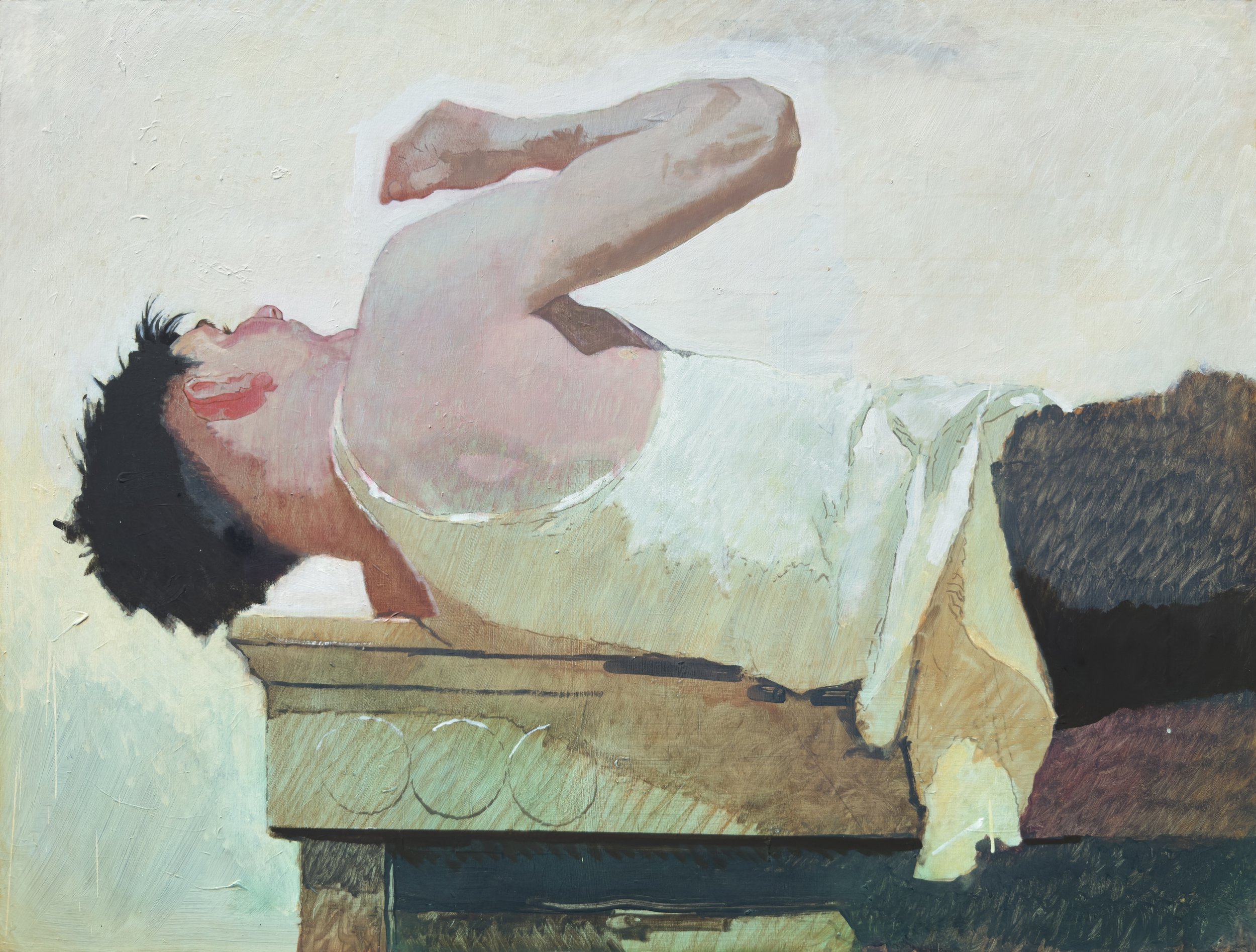
The Doldrums
2026
Oil on Board
36 × 48 inches
Recovery was undoubtedly the most important thing that happened to me this year.
It also wasn't the only thing.
Tomorrow I go back to work aboard the Laura B. for the Monhegan Boat Line.
The Laura B. is the year-round mailboat that runs between Port Clyde and Monhegan Island. Built in 1943 by M. M. Davis & Sons in Solomons, Maryland, she began her life as U.S. Army T-57, one of roughly 3,000 wooden workboats built for the United States Army Transportation Corps during the Second World War. She spent the war carrying troops, equipment, and supplies throughout the Pacific before being declared surplus and returned to civilian life. She was later rebuilt in Camden, Maine, renamed after Laura Bickford—the mother of her new owner—and spent several years hauling lobsters from Vinalhaven to Boston and New York. In 1952 Captain Earl Field, Sr. purchased her and brought her to Port Clyde, where she began carrying freight, passengers, and U.S. mail to Monhegan Island—a job she has continued to perform for more than seventy years.
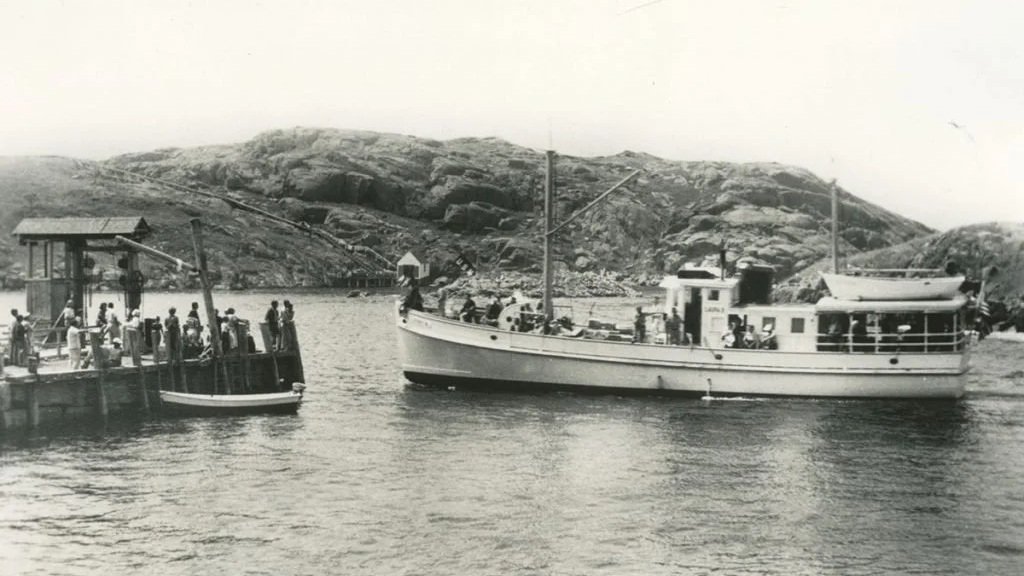
Laura B. approaching the wharf (1950s)
It amazes me that a boat built for war has spent the greater part of her life delivering groceries, propane, lumber, machinery, refrigerators, tourists, contractors, painters, and the mail to a small island twelve miles off the coast of Maine.
There is something humbling about working on a boat that has already lived several lives before I ever stepped aboard.
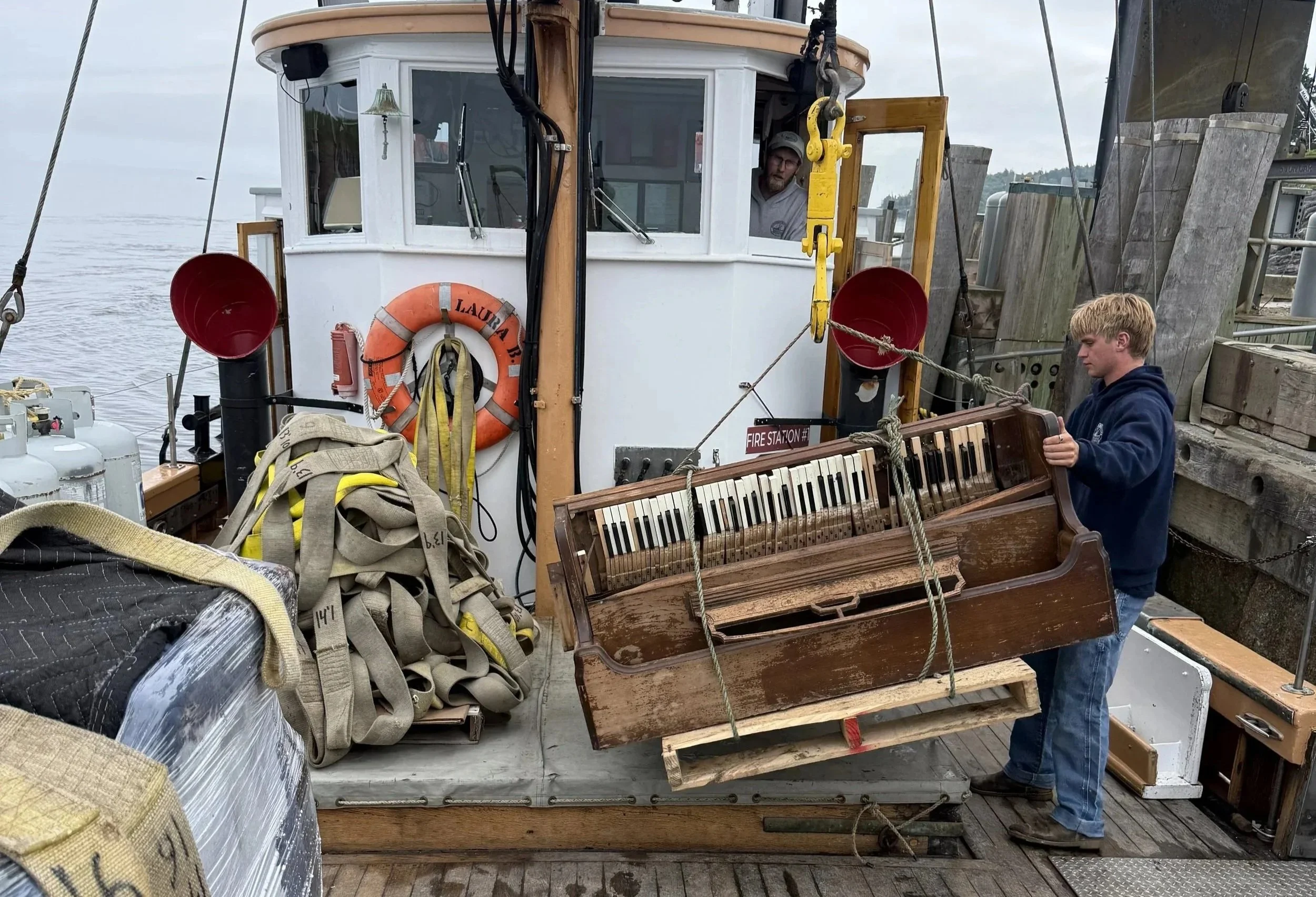
Captain Nick Thompson and Deckhand River taking old piano back to the mainland. (July 2026)
Every morning I walk onto a vessel that has outlived wars, industries, and generations of captains. Long before I was born, she had already become part of someone else's memory. The work itself is refreshingly ordinary. We load freight, tie down lumber, stack groceries, move propane, unload pallets, and help people get where they need to go. The rhythm changes with the weather and the season, but tomorrow morning the boat won't care that I just had an exhibition.
I like that.
Working aboard the Laura B. has also made me suspicious of my own attraction to the Maine coast.
Someone told me the other day, "You can't swing a lobster around here without hitting a painter."
They aren't wrong.
Monhegan has drawn painters for well over a century. Every summer another wave arrives hoping to capture the island's famous light, its weathered buildings, and its rugged beauty. I understand the skepticism of the people who live here year-round. Imagine living in a community of forty or fifty people through the winter, only to have hundreds of visitors arrive each summer convinced they've discovered something magical.
I recently read that the actor and painter Zero Mostel was said to stand on the dock as a boatload of tourists approached and shouted, "Plague! Plague! Cholera! Go back!" Whether it's true hardly matters. It made me laugh because I understood it immediately.
I don't think the magic of Monhegan is the light.
The closest thing to magic I've found is delivering propane.
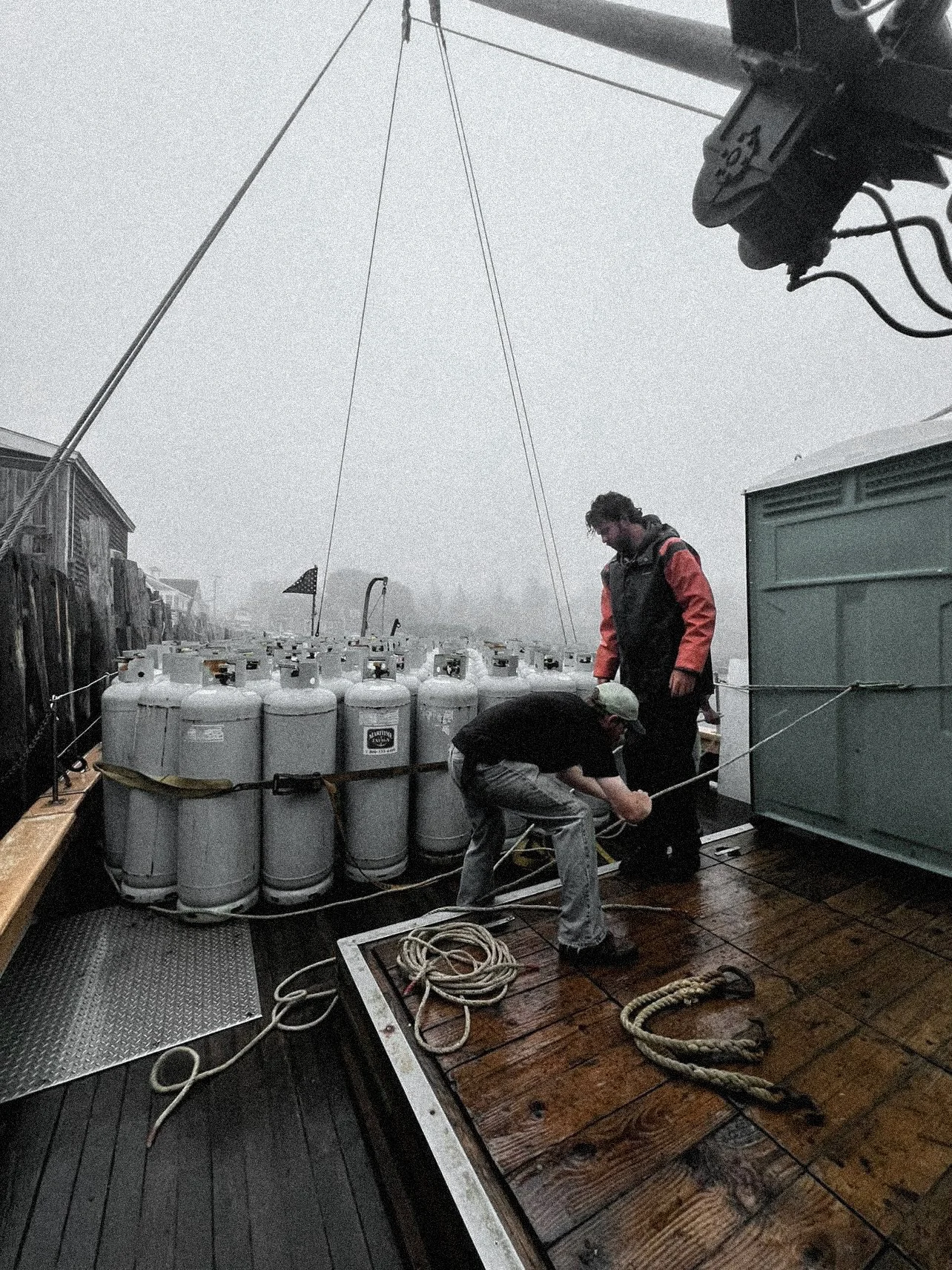
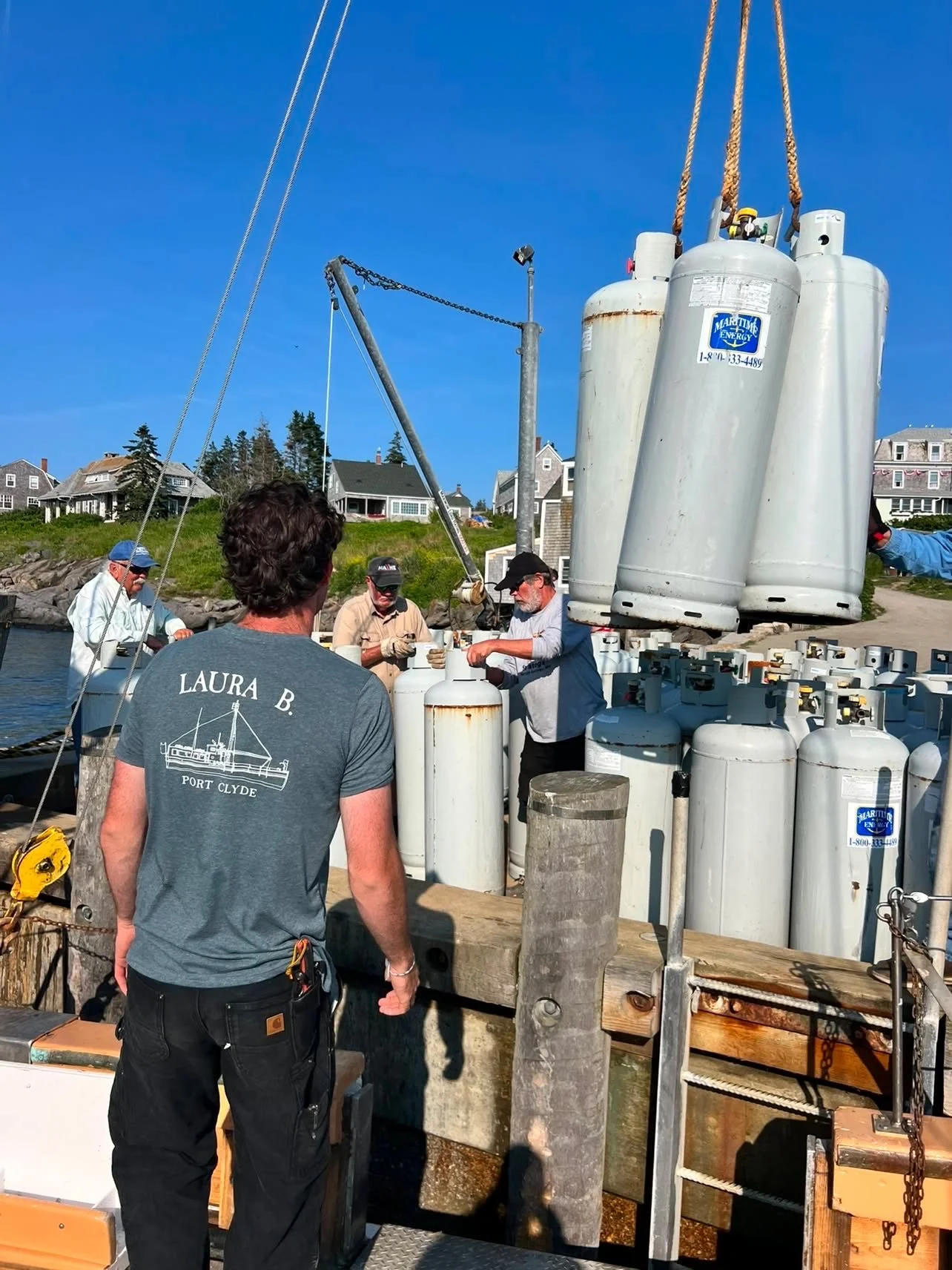
Every so often we fill the Laura B. with more than a hundred tall white Maritime Energy propane tanks. There are no tourists. No painters. No passengers. Just the captain, the crew, and a boat full of propane heading twelve miles offshore.
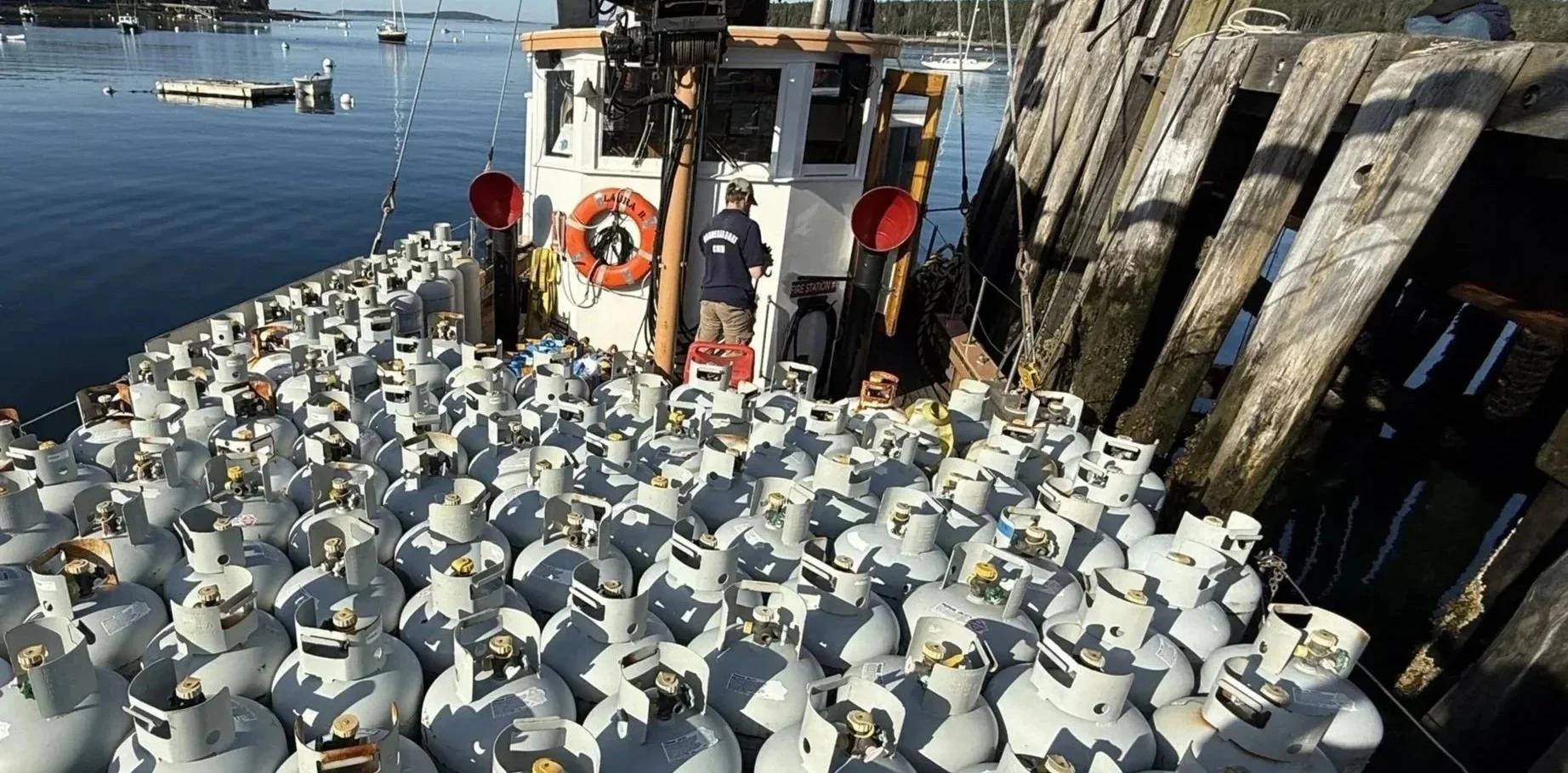
Captain Nick Terwilliger securing the propane load before heading to Monhegan Island. (July 2026)
When we arrive, Shermie is already waiting on the dock. We unload the tanks onto pickup trucks, exchange a few words, and head back to the mainland.
There isn't much to photograph.
There isn't much to paint.
It's just people doing the work that allows the island to exist.
A fair exchange. All business and no romance.
I enjoy those evenings.
Maybe that's the part I've fallen in love with.
The Maine coast has been painted so many times that I find myself questioning my own attraction to it. Lobster boats, weathered wharves, gulls, fog, bait bags—they have all become visual shorthand for a certain idea of Maine.
My fear isn't making a cliché painting.
My fear is making a dishonest one.
At the same time, I spend nearly every day here. It would be dishonest to pretend this place has no influence on my work. This painting tradition has shaped the way I see far more than I could possibly understand or control. After all, this is Wyeth country.
If my experiences eventually become artwork, I hope that through the act of painting they carry meanings that extend beyond their subjects. More importantly, I hope they remain honest. The island deserves that. So does the working waterfront that continues to exist beneath all the mythology that has grown around it.
What gives me hope is remembering artists like Andrew Winter. The stories that interest me most are not only about his paintings but about his becoming part of the island community—helping neighbors carry lobster traps to the dock, lending a hand when one was needed, and living alongside the people he painted.
Participation came before observation.
I think that is the only honest way to paint a place.
That is also what I hope this blog becomes.
Not an explanation of my paintings. I don't think paintings need explanations, and I hope they always remain capable of saying something I can't.
Instead, I hope this becomes a place to record the life they came from: mornings aboard the Laura B., days in the classroom, conversations that stay with me, books that alter the way I think, failures in the studio, the occasional good painting, and whatever else seems worth remembering.
If nothing else, maybe one day I'll be grateful that I wrote it down.
Happy summer, happy painting.
Gavin
“No sense in blowing your asshole out carrying propane” - Shermie
“We drink more water than that guy’s ever sailed on.”
